Housing Without Borders: Go Global with Haskell Modular Solutions
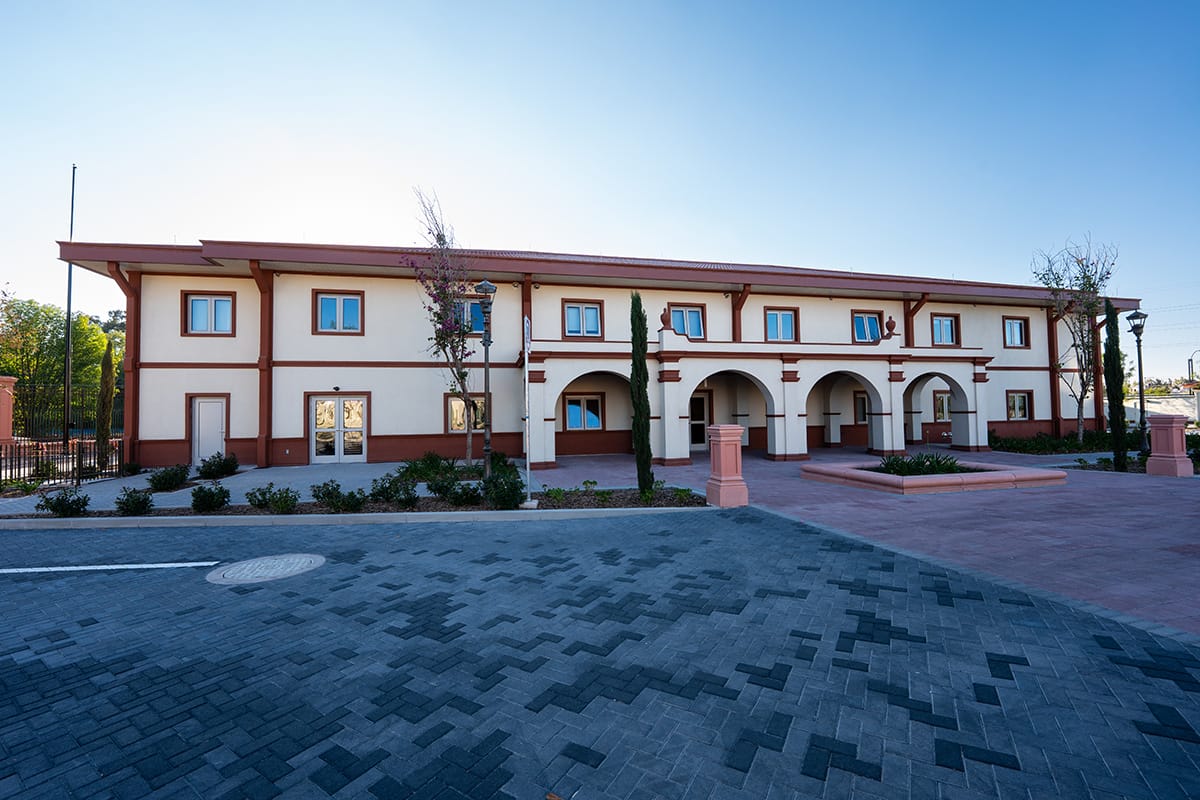

With the capacity to service over 15 diverse markets across multiple continents, Haskell is the reliable choice for our 80% repeat client base no matter how their needs evolve. So, when a longstanding client—typically known for their large-scale, institutional buildings—engaged Haskell with a very different need—multinational housing projects—Haskell knew exactly what approach to take.
Everyone agrees that time is a big challenge with conventional construction. Ambitious contractors can erect multi-story housing in 18-24 months, but these projects can often take much longer. And as delivery drags on, the likelihood of incurring undue risk, including increased costs, rises. For a client who wanted to neutralize these challenges, we recommended volumetric modular construction as a viable solution.
Haskell’s advantage as a truly integrated firm differentiates us in the modular arena. We seamlessly provide cradle-to-grave services, from design and manufacturing to installation. This creates a closed loop system that dramatically compresses timelines and protects clients from needless cost incursions, all while meeting stringent quality standards. We deliver scalable, turnkey solutions in complex global environments, where tariffs, shipping logistics or geopolitics can take a turn at any time. Wherever our clients are, we stand ready to deliver projects anytime, anywhere.
Teamwork, Expertise & Adaptability Facilitate Problem Solving Worldwide
When a confidential client asked Haskell to develop and efficiently deliver a housing program across dozens of countries and multiple continents, we proposed a modular solution. They listened, and we leveraged our long history of a fully integrated approach designing, manufacturing, and installing an array of modular project types to complete several projects in three to eight months. Virtually impossible with traditional stick-built construction, we accomplished this through teamwork, expertise, and adaptability.
Teamwork | Cagayan de Oro, Philippines
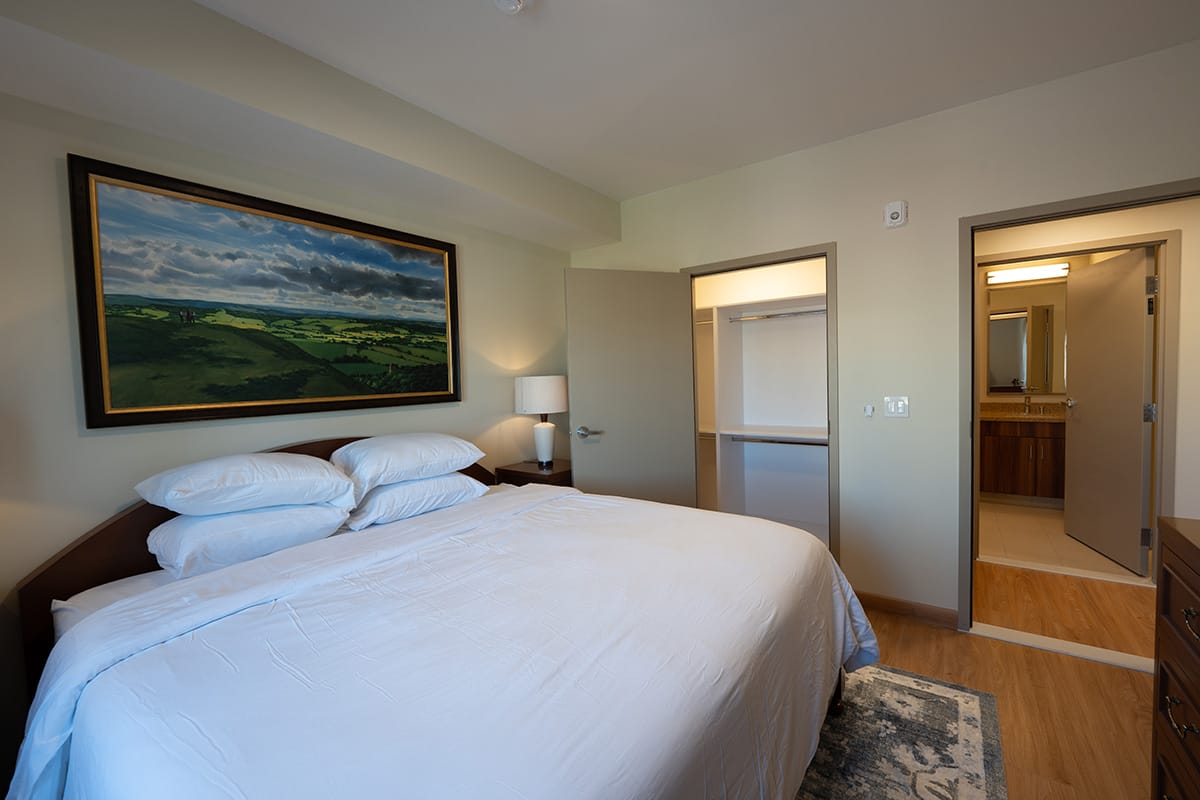
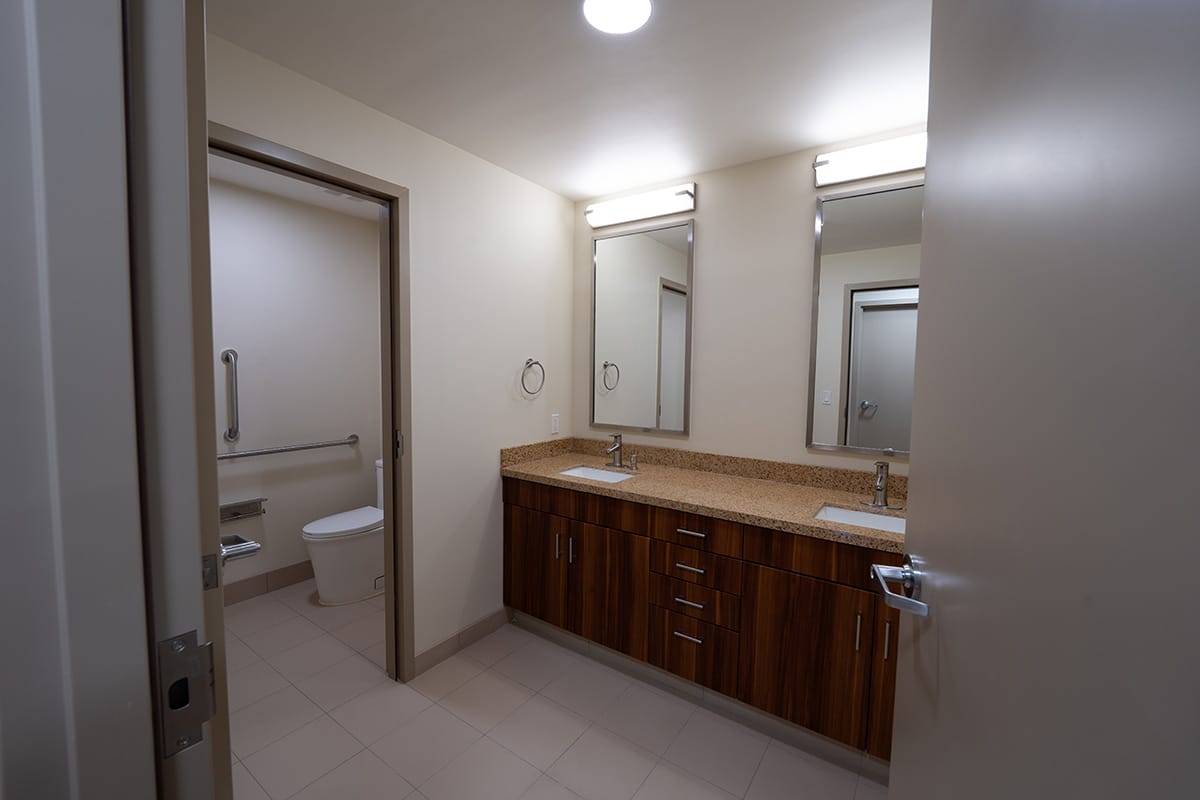
Haskell demonstrated just how quickly a 22,000-square-foot housing facility could safely be installed in the heart of the Philippines. A single component of a larger plan for this five-acre site, we managed the housing building as a stand-alone project with its own critical path. This decision empowered greater collaboration with our subcontractors and enabled buy-in for a single mobilization. Modules were delivered to the project site in November and within three months all 26 had been set, stitched, installed, and the building was substantially complete. The team exceeded the client’s project goals and met its own objective of driving completion of the housing facility and leaving it operational.
Expertise | San Luis Potosí, Mexico
Our 14,500-square-foot housing project in San Luis Potosí, Mexico showcases Haskell’s internal procurement and logistics teams’ capabilities. This effort highlights their ability to source materials and equipment from vendors on multiple continents. Experts in procurement and logistics, they ensured that every component, from heavy steel frames to final furnishings, arrived on a tight, synchronized schedule. Modules were designed to our client’s strict guidelines and arrived ready to be set, stitched and installed, resulting in a seamless delivery that underscored the strength of Haskell’s integrated approach.
Adaptability | Managua, Nicaragua
When asked to provide additional housing in a year’s time, Haskell’s design team leveraged existing layouts to jumpstart the project, responding to a near-term opportunity that demanded immediate action. We modified our standard prototype design to meet the client’s new criteria for this 9,500-square foot project and moved from first weld in the factory to final installation in eight months. Our ability to adapt was vital in a region where geopolitical instability, supply chain disruptions, and new tariffs on imported goods can inflate building costs suddenly.
Integrated Expertise
Each build provides new “lessons learned,” strengthens our capabilities throughout the project lifecycle, and allows us to confidently price and deliver turnkey housing solutions across global markets. Ultimately, the success of these projects demonstrates not only the effectiveness of modular delivery, but also Haskell’s ability to respond quickly and reliably to our clients’ evolving needs, anywhere in the world.
Mais sobre a Modular Advantage
MBI Town Halls 2026: Reflections from Boston
By the end of 2026 MBI’s Government Affairs team will have traveled over 6,000 air miles to bring Town Hall events to five different cities in two countries.
Mind the Gap: The Interface Between Onsite and Offsite Construction
Every design for manufacture and assembly (DfMA) project — modular, mass timber, or panelized — is really two projects joined at a seam. One is built in a controlled factory to millimeter tolerances; the other in the field, in weather, to the looser tolerances of poured concrete and human hands. Between them sits an interface: where the factory’s precision meets the site’s reality.
Rules, Rails & Repeatability: Applying DfMA to Modular Healthcare
DfMA offers several advantages for healthcare projects, with faster delivery among the most valuable. Schedule matters when building new facilities, expanding campuses, renovating existing space or bringing care closer to communities that need it.
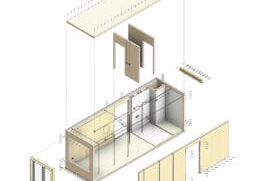
Precision and Possibility: Demands of DfMA and What Modular Mass Timber Makes Possible
Mass timber does not automatically create an efficient modular building. Its precision makes early coordination more important: fabricated components will accurately reproduce both the team’s solutions and its mistakes. The material’s advantages are realized only when supported by an equally precise design and delivery process.
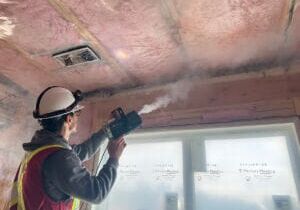
Catch It in the Factory, Not in the Field: Smarter Testing for Modular Builds
Integrating watertightness and airtightness testing into factory workflows transforms quality assurance from a reactive process into a proactive commissioning strategy. It ensures that every module shipped is field ready and resilient for transportation while also supporting the ability of the modular construction industry to make buildings better.
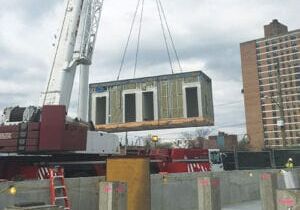
Modular Construction Contracts: Key Considerations for Successful Canadian Projects
Starting a modular project with a well-developed contract protects both the owner and the contractor. It will help keep the project on track and on budget, and it will improve quality from the factory floor to final installation on-site.
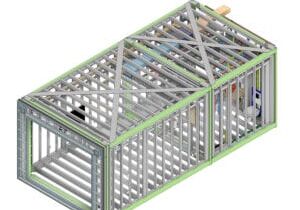
Modular by Design: Turning Architecture into a Manufacturing System
Modular construction is often presented as a faster way to build. Speed, however, is only one part of its value. The larger opportunity is to create a coordinated design and production system that improves quality, reduces uncertainty, and allows a building to move efficiently from concept design through manufacturing, transportation, installation, and completion.
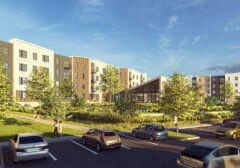
Repeatability Begins with Trust: What Alora at Dry Creek Reveals About Scaling Modular Housing
Alora at Dry Creek, a 329-unit, multifamily community comprising five four-story buildings in Centennial, Colorado, demonstrates how repeatable design, standardized manufacturing and early collaboration can work together to create a model that is not only faster to deliver, but easier to replicate across future projects.

T.R. Arnold: The Art of Third-Party Inspections
T.R. Arnold (TRA), a third-party inspection company in Elkhart, Indiana, contracts with modular manufacturers across the US. Manufacturers register with each state to which they intend to send their modules and may be required to hire a third-party inspection company.
Creating an ‘Ecosystem for Innovation:’ 50+ Years of Modular Construction Oversight in Virginia
Virginia’s modular building program began in 1973, with the implementation of the Virginia Industrialized Building Unit and Mobile Home Safety Regulations. Now it’s leading the country in modular code adoption.