
Sistemas modernos de construção - Complexo de 8 salas de aula
O Distrito Escolar de Yelm desejava uma solução prática e temporária de sala de aula de 8.200 pés quadrados, tudo sob o mesmo teto, para abrigar sua crescente população de alunos. Essa estrutura, desenvolvida pela Modern Building Systems, foi projetada e contratada tendo em mente a eficiência e a possibilidade de reutilização. Ela conta com seis salas de aula, dois banheiros e dois laboratórios de informática.
As salas de aula estão situadas ao longo de um corredor que percorre toda a extensão do edifício, simplificando a acessibilidade dentro do edifício e permitindo uma sensação interior semelhante à da escola principal. O revestimento externo e o telhado do edifício também foram projetados para combinar com os edifícios vizinhos. O projeto foi desafiador, pois o terreno existente era rochoso e exigia um ajuste exato da pegada.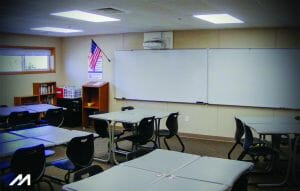
A utilização da construção modular em um cenário de espaço temporário permitiu que o distrito escolar utilizasse melhor os recursos e garantiu que as salas de aula de qualidade estivessem prontas para o início do ano letivo sem atrapalhar as aulas. A Modern Building Systems forneceu uma solução eficiente que atendeu às restrições orçamentárias e de prazo.
As janelas menores de vidro temperado mantêm o custo do material de construção baixo e, ao mesmo tempo, proporcionam maior isolamento, criando mais espaço de parede de ensino para o interior e economia de energia no futuro. Os sensores de luz de movimento em todo o edifício ajudam ainda mais na economia de controle de energia.
Este artigo foi publicado originalmente na Modular Advantage Magazine - First Quarter 2018, lançada em fevereiro de 2018.
Mais sobre a Modular Advantage
MBI Town Halls 2026: Reflections from Boston
By the end of 2026 MBI’s Government Affairs team will have traveled over 6,000 air miles to bring Town Hall events to five different cities in two countries.
Mind the Gap: The Interface Between Onsite and Offsite Construction
Every design for manufacture and assembly (DfMA) project — modular, mass timber, or panelized — is really two projects joined at a seam. One is built in a controlled factory to millimeter tolerances; the other in the field, in weather, to the looser tolerances of poured concrete and human hands. Between them sits an interface: where the factory’s precision meets the site’s reality.
Rules, Rails & Repeatability: Applying DfMA to Modular Healthcare
DfMA offers several advantages for healthcare projects, with faster delivery among the most valuable. Schedule matters when building new facilities, expanding campuses, renovating existing space or bringing care closer to communities that need it.
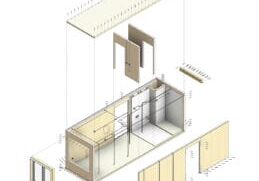
Precision and Possibility: Demands of DfMA and What Modular Mass Timber Makes Possible
Mass timber does not automatically create an efficient modular building. Its precision makes early coordination more important: fabricated components will accurately reproduce both the team’s solutions and its mistakes. The material’s advantages are realized only when supported by an equally precise design and delivery process.
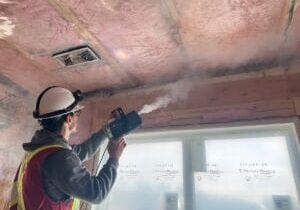
Catch It in the Factory, Not in the Field: Smarter Testing for Modular Builds
Integrating watertightness and airtightness testing into factory workflows transforms quality assurance from a reactive process into a proactive commissioning strategy. It ensures that every module shipped is field ready and resilient for transportation while also supporting the ability of the modular construction industry to make buildings better.
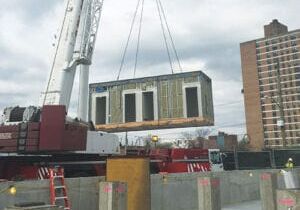
Modular Construction Contracts: Key Considerations for Successful Canadian Projects
Starting a modular project with a well-developed contract protects both the owner and the contractor. It will help keep the project on track and on budget, and it will improve quality from the factory floor to final installation on-site.
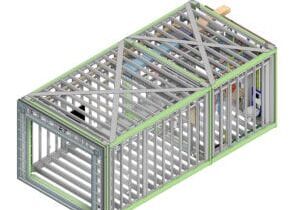
Modular by Design: Turning Architecture into a Manufacturing System
Modular construction is often presented as a faster way to build. Speed, however, is only one part of its value. The larger opportunity is to create a coordinated design and production system that improves quality, reduces uncertainty, and allows a building to move efficiently from concept design through manufacturing, transportation, installation, and completion.
Repeatability Begins with Trust: What Alora at Dry Creek Reveals About Scaling Modular Housing
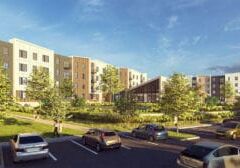
Alora at Dry Creek, a 329-unit, multifamily community comprising five four-story buildings in Centennial, Colorado, demonstrates how repeatable design, standardized manufacturing and early collaboration can work together to create a model that is not only faster to deliver, but easier to replicate across future projects.

T.R. Arnold: The Art of Third-Party Inspections
T.R. Arnold (TRA), a third-party inspection company in Elkhart, Indiana, contracts with modular manufacturers across the US. Manufacturers register with each state to which they intend to send their modules and may be required to hire a third-party inspection company.
Creating an ‘Ecosystem for Innovation:’ 50+ Years of Modular Construction Oversight in Virginia
Virginia’s modular building program began in 1973, with the implementation of the Virginia Industrialized Building Unit and Mobile Home Safety Regulations. Now it’s leading the country in modular code adoption.