
Ramtech Building Systems - Campus Escolar Permanente
Esse projeto oferece espaço para 24 salas de aula padrão para acomodar até 528 alunos adicionais. O prédio tem cinco salas de aula de uso especial para os programas de arte, música, fala e educação especial da escola. Também inclui um refeitório com cozinha de aquecimento, escritórios administrativos, biblioteca, centro de tutoria e laboratório de aprendizagem, além de uma sala de ginástica multiuso de 3.000 pés quadrados com piso esportivo e pé-direito de 14 pés. Incorporamos uma mistura de alvenaria e EFIS que complementou as estruturas existentes e proporcionou uma aparência coesa ao campus. As seleções de acabamentos internos foram amplamente orientadas pelo uso educacional e incluíram gesso pintado, ladrilhos resilientes e cerâmicos, além de um teto suspenso acústico.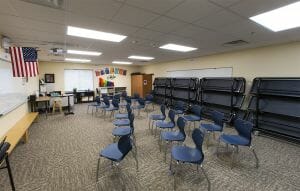
A Ramtech desenvolveu nosso sistema de PMC Slab-on-Grade como um meio eficiente de fornecer pisos de concreto e, ao mesmo tempo, lidar com os solos altamente expansivos encontrados em todo o Texas. As instalações convencionais de PMC de pilares e vigas requerem uma fundação de viga de nível ou de parede-tronco apoiada normalmente por pilares perfurados sob a corrente. Em seguida, um pilar de bloco convencional suporta um sistema de piso modular de aço com uma plataforma de aço corrugado e três polegadas de concreto leve derramado.
Essa redundância de estruturas (despesas com fundação e um sistema de piso modular) aumenta consideravelmente o custo do projeto. Ao utilizar uma laje de concreto convencional vazada no local, conforme prescrito pelo engenheiro geotécnico, e depois colocar um módulo sem piso diretamente sobre a laje, três coisas são obtidas a um custo menor: melhor acústica do piso devido à maior massa (pisos silenciosos); uma entrada no nível do solo é fornecida em todas as portas externas; e não há espaço para ventilação, reduzindo muito a possibilidade de má qualidade do ar interno.
This article originally appeared in the Modular Advantage Magazine - First Quarter 2018 released in February 2018.
Mais sobre a Modular Advantage
MBI Town Halls 2026: Reflections from Boston
By the end of 2026 MBI’s Government Affairs team will have traveled over 6,000 air miles to bring Town Hall events to five different cities in two countries.
Mind the Gap: The Interface Between Onsite and Offsite Construction
Every design for manufacture and assembly (DfMA) project — modular, mass timber, or panelized — is really two projects joined at a seam. One is built in a controlled factory to millimeter tolerances; the other in the field, in weather, to the looser tolerances of poured concrete and human hands. Between them sits an interface: where the factory’s precision meets the site’s reality.
Rules, Rails & Repeatability: Applying DfMA to Modular Healthcare
DfMA offers several advantages for healthcare projects, with faster delivery among the most valuable. Schedule matters when building new facilities, expanding campuses, renovating existing space or bringing care closer to communities that need it.
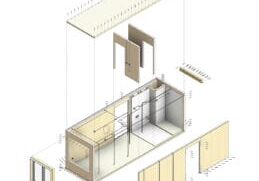
Precision and Possibility: Demands of DfMA and What Modular Mass Timber Makes Possible
Mass timber does not automatically create an efficient modular building. Its precision makes early coordination more important: fabricated components will accurately reproduce both the team’s solutions and its mistakes. The material’s advantages are realized only when supported by an equally precise design and delivery process.
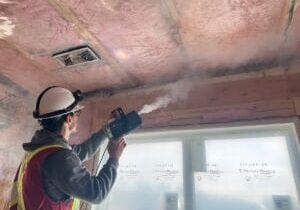
Catch It in the Factory, Not in the Field: Smarter Testing for Modular Builds
Integrating watertightness and airtightness testing into factory workflows transforms quality assurance from a reactive process into a proactive commissioning strategy. It ensures that every module shipped is field ready and resilient for transportation while also supporting the ability of the modular construction industry to make buildings better.
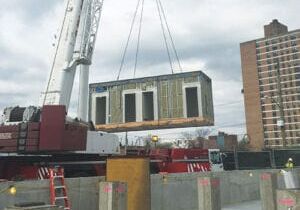
Modular Construction Contracts: Key Considerations for Successful Canadian Projects
Starting a modular project with a well-developed contract protects both the owner and the contractor. It will help keep the project on track and on budget, and it will improve quality from the factory floor to final installation on-site.
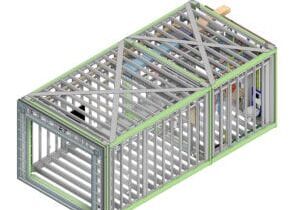
Modular by Design: Turning Architecture into a Manufacturing System
Modular construction is often presented as a faster way to build. Speed, however, is only one part of its value. The larger opportunity is to create a coordinated design and production system that improves quality, reduces uncertainty, and allows a building to move efficiently from concept design through manufacturing, transportation, installation, and completion.
Repeatability Begins with Trust: What Alora at Dry Creek Reveals About Scaling Modular Housing
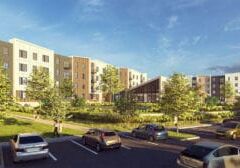
Alora at Dry Creek, a 329-unit, multifamily community comprising five four-story buildings in Centennial, Colorado, demonstrates how repeatable design, standardized manufacturing and early collaboration can work together to create a model that is not only faster to deliver, but easier to replicate across future projects.

T.R. Arnold: The Art of Third-Party Inspections
T.R. Arnold (TRA), a third-party inspection company in Elkhart, Indiana, contracts with modular manufacturers across the US. Manufacturers register with each state to which they intend to send their modules and may be required to hire a third-party inspection company.
Creating an ‘Ecosystem for Innovation:’ 50+ Years of Modular Construction Oversight in Virginia
Virginia’s modular building program began in 1973, with the implementation of the Virginia Industrialized Building Unit and Mobile Home Safety Regulations. Now it’s leading the country in modular code adoption.